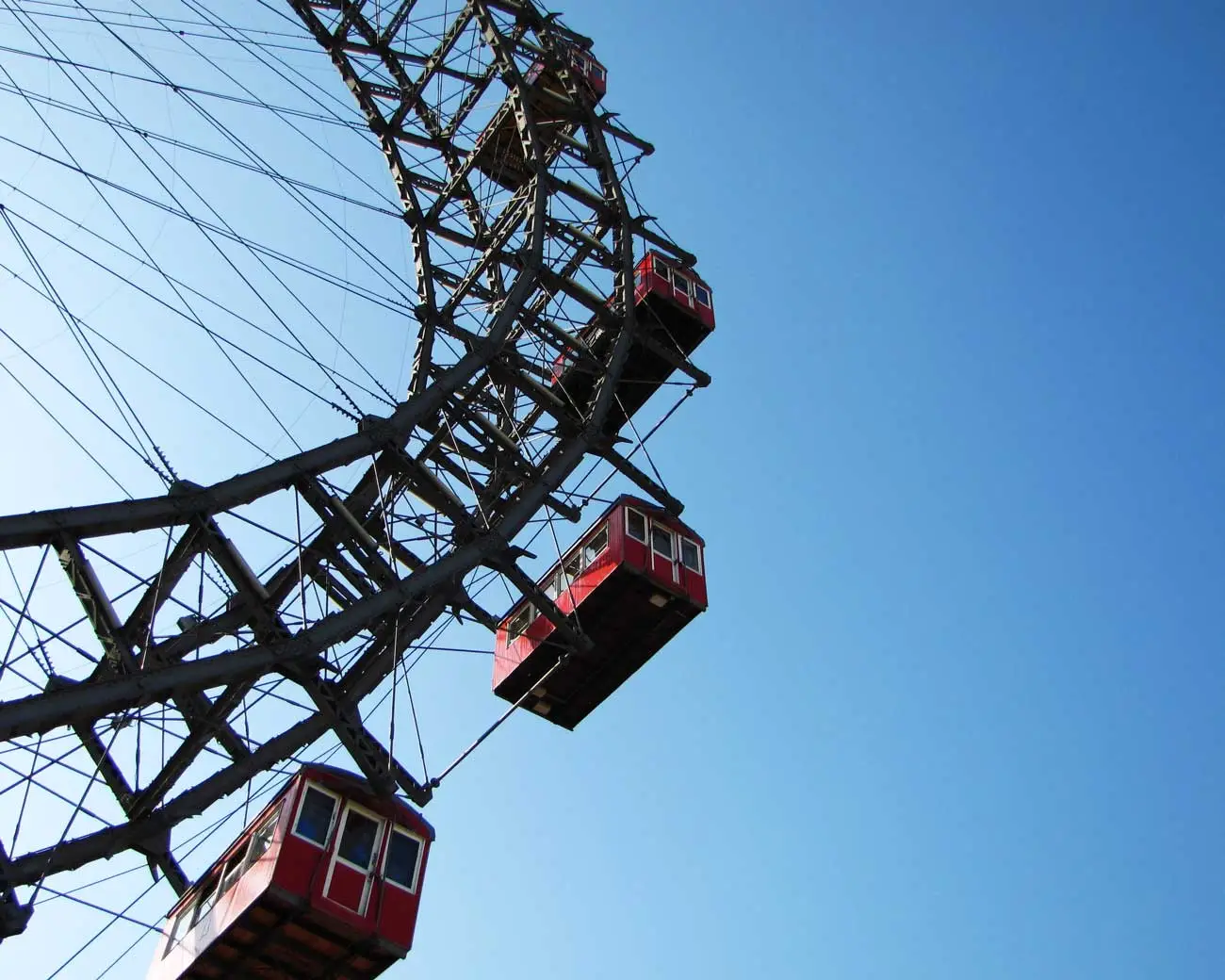
Vienna – The metropolis on the Danube has been one of Europe‘s most important logistics locations for nearly 1,500 years. As early as Roman times, the continent‘s major trade routes between north and south, east and west, converged here. Today, Austria‘s capital benefits more than ever from its strategic position at the heart of Europe.
(Featured Image: Rainer Sturm / www.pixelio.de)
Vienna is many things: a cultural capital, the seat of government, home to major UN organisations, a tourism magnet and, according to Mercer’s quality-of-life surveys, consistently one of the world’s most liveable cities. Yet one role of the Danube metropolis is underestimated even by many Viennese themselves: for centuries, Vienna has been one of Europe’s most important logistics centres.
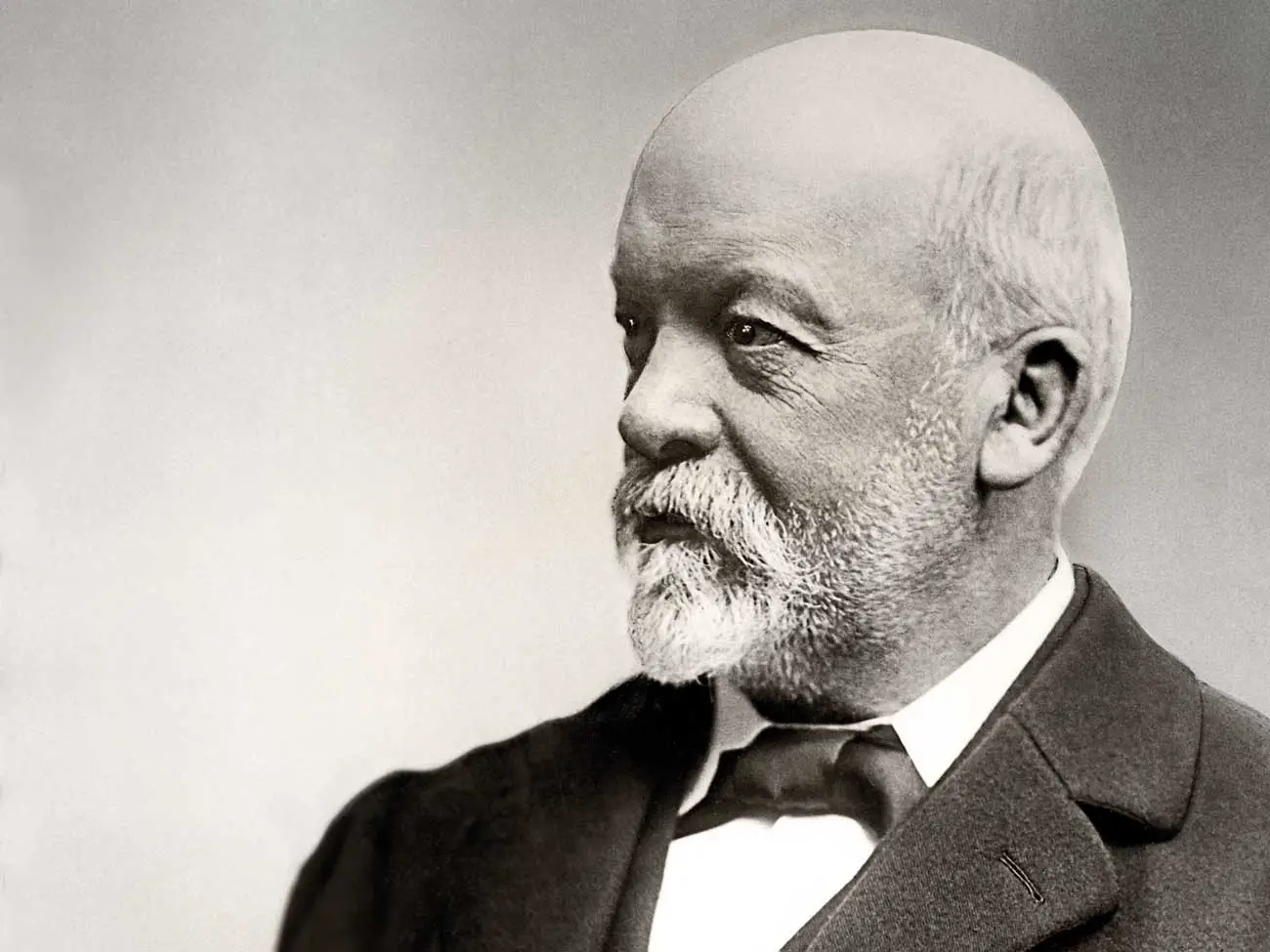
Anyone seeking to understand why pioneers such as Gottfried Schenker built their careers here, and why some of the world’s leading logistics companies, including cargo-partner, DSV, Dachser, Fiege and Gebrüder Weiss, operate their Central and Eastern European headquarters in Vienna, must look deep into history. Long before terms such as supply chain management, intermodal transport or logistics hub were coined, Vienna was already one of the continent’s key freight and trading centres.
At the Heart of an Empire
In the 19th century, Vienna was no ordinary city. It was the capital of the Habsburg Monarchy and thus the political, economic and cultural nerve centre of an empire stretching from Northern Italy through Bohemia, Hungary and Croatia deep into the Balkans. At the time, Vienna ranked among the world’s largest cities and, during Gottfried Schenker’s era, was the fifth-largest city on the globe, with more than two million inhabitants.
For merchants, this offered enormous advantages. Doing business in Vienna meant access to a vast economic area. Around 40 languages and dialects were spoken in the city. Traders, entrepreneurs and bankers from across Europe converged here. Goods from Western Europe met raw materials from Eastern Europe and agricultural products from Hungary. The Danube linked Vienna to the Black Sea, while trade routes connected the city with Germany, Italy and the Balkans.
Vienna also maintained close commercial ties with the Hanseatic city of Hamburg from as early as the Middle Ages, a relationship that continues to this day. Hamburg remains one of Austria’s most important import and export ports, with a significant share of Austrian cargo passing through Vienna. Even during the imperial era, Vienna was effectively what we would today describe as an international logistics hub.
The Perfect Place for Gottfried Schenker
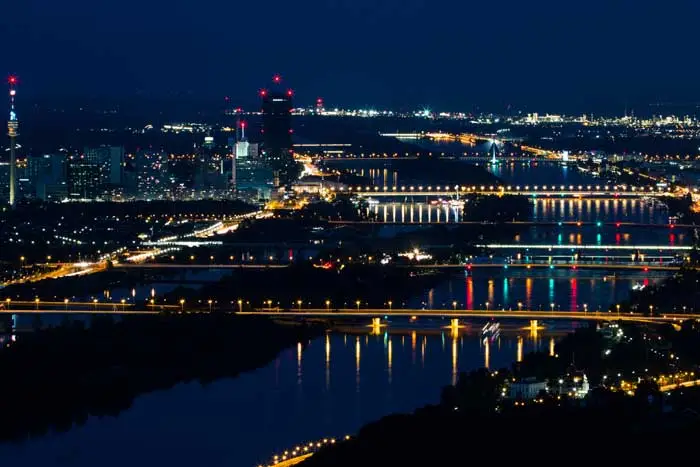
(Photo: Thomas Lieber / www.pixelio.de)
It was therefore no coincidence that Gottfried Schenker chose Vienna as the starting point for building his company (see the article “A Man Who Wanted More” in this issue). For the Swiss entrepreneur, Vienna offered far more than an attractive business location. It was also a centre of innovation, science and entrepreneurship. Anyone with an idea and the willingness to take risks could find exceptional opportunities for growth.
The Danube metropolis attracted talent from across Europe and evolved into one of the continent’s leading centres of innovation. Renowned physicians such as Ignaz Semmelweis and Theodor Billroth worked here, alongside distinguished engineers including Ferdinand Porsche, as well as countless scientists and entrepreneurs.
When Schenker arrived in the Imperial and Royal capital in 1867, he quickly recognised the opportunities created by the city’s central location in the heart of Europe and by the booming East-West and North-South trade flows that converged there. Equally important was the Habsburg Empire’s access to the Adriatic Sea through the Port of Trieste, which, alongside Hamburg, already played a pivotal role in international trade.
It is therefore hardly surprising that Schenker developed his concept of international rail groupage services in Vienna. In simple terms, individual shipments were consolidated into larger transport units and moved efficiently over long distances. The legendary first groupage rail wagon on the Paris-Vienna route in 1873 marked the beginning of a development that would fundamentally transform logistics and continues to shape the industry today.
Vienna offered ideal conditions for such innovation: international trade links, a rapidly expanding railway network, the Danube as a major waterway, and an economy that was already thinking increasingly in global terms.
From a small business located on Vienna’s Wildpretmarkt, Schenker built what would become one of the world’s leading logistics companies. His success was also proof of Vienna’s strategic importance as a transport and trading crossroads.
The Danube: Europes and Vienna’s Lifeline
The true foundation of Vienna’s importance as a logistics centre, however, reaches much further back in history. As early as the 1st century AD, the Romans systematically used the Danube as a transport, supply and trade route. After securing the territories south of the river in the provinces of Noricum and Pannonia, they established the so-called Danube Limes along its banks, the northern frontier of the Empire. Yet the river was far more than a military boundary. It developed into one of Europe’s most important waterways.
Why the Danube Matters
For the Romans, the Danube was essentially an ancient motorway. It carried what would today be described as bulk cargo, including grain, wine, olive oil, salt and iron, as well as ceramics, military supplies and luxury goods from the Mediterranean world. In many ways, this has remained unchanged to the present day.
Water transport was significantly cheaper and faster for the Romans than moving goods over land. As a result, the Danube linked major Roman centres from Regensburg and Passau through Linz, Vienna and Carnuntum all the way to the Black Sea.
The Role of Vindobona
Roman Vindobona, present-day Vienna, was founded as a legionary camp in the late 1st century AD. Its location was carefully chosen by Roman strategists. The fort stood directly beside a navigable branch of the Danube. Here, just as today, important North-South and East-West trade routes intersected. The elevated Vienna river terrace also provided a safe, flood-free location for storage facilities, port infrastructure and settlements. A thriving civilian town soon emerged alongside the military camp, populated by craftsmen, merchants, innkeepers and transport operators. Vindobona was therefore not merely a frontier fortress but also an important transshipment centre for goods moving along the Danube.
Vienna’s Strategic Location
From a logistics perspective, Vienna already possessed 2,000 years ago many of the same advantages it enjoys today. The city lies at the gateway to the Vienna Basin, where the transport corridors linking the Alpine region, Central Europe and South-Eastern Europe intersect.
It was no coincidence that just a few kilometres east of Vindobona the Romans established the vast complex of Carnuntum, then the most important administrative and commercial centre on the Middle Danube. The city stood on a branch of the legendary Amber Road, a trade route that brought prosperity for centuries. Together, Carnuntum and Vindobona formed one of the most important logistical and commercial hubs in the Danube region. Today, the Danube connects ten countries and serves an economic area of approximately 130 million people. As a major inland waterway, it links Western, Central and South-Eastern Europe with the Black Sea and, through it, with global markets.
Dark Years on the Danube
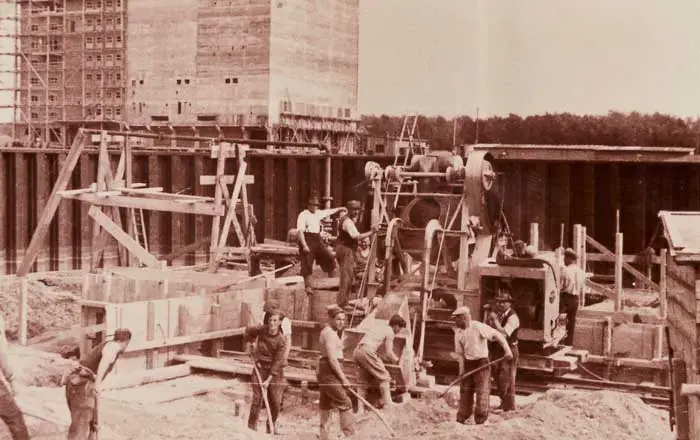
(Photo: Wien Holding / HJS archive)
There is, however, another chapter in the history of the Danube waterway that deserves attention, particularly when discussing the Port of Vienna. Important as the port is today as an international logistics centre, understanding its past is equally essential.
During the Nazi era, Vienna was intended to become the “Hamburg of the East.” The port facilities at Albern and Lobau formed part of these ambitious infrastructure plans. Significant sections of the complex were built by more than a thousand forced labourers and prisoners of war, including Jewish workers, many of whom were employed under appalling conditions. Historical research into this period has shown that behind the National Socialist expansion plans stood not only economic and military ambitions, but also a system of coercion, disenfranchisement and exploitation.
Post-War Years: A Historic Turning Point
After the Second World War, however, the Danube abruptly lost much of its economic significance as a consequence of the Iron Curtain. For centuries, people, grain, timber, coal, iron and later industrial goods had moved along the river between Ulm and the Black Sea. Following the war, this long-established flow changed dramatically. Vienna, which had been one of the principal transshipment centres along this corridor, suddenly lost its central position and found itself on the edge of the free world.
The Danube was never completely closed, but it ceased to function as a freely accessible European waterway. Political, military and ideological borders now divided Austria from Czechoslovakia, Hungary, Yugoslavia, Romania and Bulgaria. River traffic became subject to permits, while border controls caused severe delays. Even more damaging was the fact that many Western companies, particularly in Germany, avoided doing business with the Eastern Bloc altogether. The previously well-organised international supply chains began to break down, and the ports lost a significant share of their economic importance.
From the Centre to the Periphery
Vienna was particularly affected by these developments. After 1945, the city suddenly found itself on the eastern frontier of the Western world. Just 60 kilometres east of Vienna began the Soviet sphere of influence. Bratislava, for example, now only a 45-minute drive from Vienna, remained geographically close but became politically more distant than many cities in Western Europe.
As a consequence, numerous international trade flows shifted westward, particularly towards the Rhine corridor and the North Sea ports of Hamburg, Rotterdam and Antwerp.
The Economic Decline of Danube Ports
The effects were profound. While Rhine ports such as Duisburg, Basel and Rotterdam prospered, many Danube ports developed far more slowly, including Vienna. One reason was the lack of major investment. For example, direct freight rail connections to higher-capacity railway networks that had been destroyed during the Second World War were never fully restored. Modernisation projects were postponed or abandoned altogether. Anyone visiting the Port of Vienna during those decades would have encountered a comparatively quiet facility, especially when measured against the dynamic growth of the Rhine ports.
From the Periphery Back to the Centre
The decisive turning point came in 1989. With the fall of the Iron Curtain, Europe’s geopolitical landscape changed fundamentally once again. Almost overnight, Vienna moved from the edge of the West back to the centre of the continent. International companies recognised this potential early. Numerous corporations established their Central and Eastern European headquarters in Vienna and used the city as a base for expanding into newly opening markets.
For the Austrian capital, this marked a return to the central role it had played for centuries. Vienna once again became a bridge between East and West, as well as between Northern and South-Eastern Europe. Within only a few years, the city had emerged as one of the most important headquarters locations for Central and Eastern Europe. Hundreds of international companies established operations there, and Vienna continues to benefit from this development today.
The Four Modes
(Photo: Wien Holding / Hafen Wien / HJS archive)
With the fall of the Iron Curtain in 1989, and particularly following Austria’s accession to the European Economic Area and later the European Union, Vienna was once again able to capitalise fully on its geographical advantages. Today, those advantages are embodied in its transport infrastructure, into which billions of euros have been invested since the opening of Eastern Europe.
While the total amount invested in transforming Vienna into one of Europe’s rare quadri-modal logistics hubs, integrating inland waterway, rail, road and air transport, cannot be determined precisely, the figure is undoubtedly well in excess of €10 billion. Industry estimates place the cumulative investment more realistically in the range of €15 to €20 billion. Funding has come from a combination of sources, including the City of Vienna, the Austrian federal government, Austrian Railways (ÖBB), motorway operator ASFINAG, the European Union and numerous private-sector companies.
Today, Vienna has regained its role as the western gateway to Southeast Europe and the Black Sea region, and vice versa. Modern block-train services connect the city with the major North Range ports of Rotterdam and Antwerp, as well as the German seaports of Hamburg and Bremerhaven. Strong rail links also connect Vienna with Duisburg, Europe’s largest inland port.
At the same time, efficient corridors lead south to the Adriatic ports of Trieste and Koper. These connections are complemented by a dense motorway network that links Vienna with virtually every major economic centre in Europe. Finally, Vienna International Airport provides direct access to global air cargo networks. It is precisely this combination that has made Vienna one of Europe’s most attractive logistics locations for many years, a place where Gottfried Schenker would undoubtedly have felt at home.
The Heart of the System: Port of Vienna
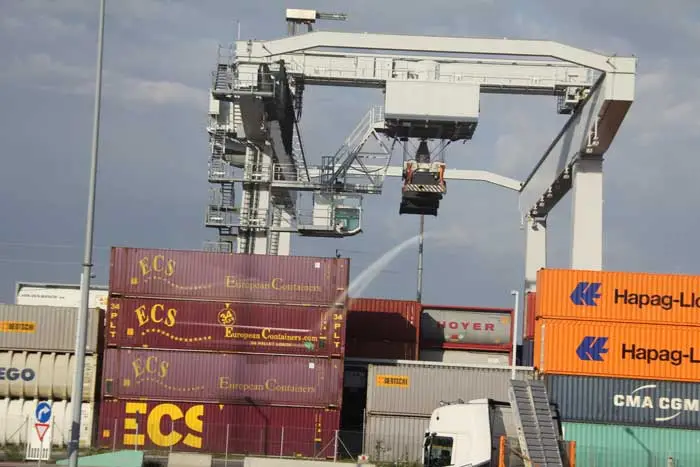
This development is perhaps most clearly visible at the Port of Vienna. Covering around three million square metres, it is today the largest logistics centre in Eastern Austria. Approximately 200 companies employing around 5,000 people are based on the site. Through its three specialised cargo ports at Freudenau, Albern and Lobau, the Port of Vienna serves as a key interface for international freight flows. Around 1,200 cargo vessels are handled here each year. At the same time, the port benefits from direct rail and road connections, making it one of the most important trimodal logistics hubs in Central Europe.
Its recent performance underlines this success story. In 2025, the port group once again delivered strong financial results, generating revenues of around €55 million and earnings of nearly €11 million. Total cargo throughput surpassed four million tonnes, highlighting the growing importance of the location within European supply chains.
More Than Just a Port
Today, the Port of Vienna is far more than a transhipment facility. It functions simultaneously as a logistics park, container terminal, innovation centre and supply hub. Even Europe’s film industry has discovered the port as a valuable logistics location.
In 2025, the launch of thinkport VIENNA created the first innovation hub operated by an inland port within the global network of leading port innovators. Together with international partners, the initiative develops solutions for the logistics challenges of the future.
At the same time, the City of Vienna, Wien Holding and the Port of Vienna continue to invest heavily in digitalisation, sustainability and climate protection. The port increasingly relies on renewable electricity, is expanding its photovoltaic capacity and is pursuing a clear strategy of shifting even more freight from road to rail and inland waterways.
The Renaissance of an Old Success Model

(Photo: Rainer Sturm / www.pixelio.de)
Following the end of the Cold War, Vienna has experienced a renaissance of its historic role. Gottfried Schenker was already combining rail, waterborne and road transport more than a century ago. Today, the industry speaks of multimodal transport chains and integrated supply chains. Yet the underlying concept remains largely unchanged: moving goods as efficiently as possible across different modes of transport. This is precisely why, in the age of global supply chains, Vienna feels remarkably like a city whose time has come again.
Vienna: A Logistics Metropolis
Perhaps this also explains why the Logistics Hall of Fame repeatedly maintains a close connection to Vienna (Have a lokk on the cover-story of Edition BUSINESS+LOGISTIC 2/2026). The city exemplifies many of the forces that have shaped modern logistics: international trade, world-class transport infrastructure, innovation, entrepreneurship and the ability to connect different cultures and markets.
A direct line runs through history, linking the merchants of the Habsburg Empire, the pioneers of the railway age and today‘s operators of global supply chains. Vienna was never a seaport like Hamburg or Rotterdam. Yet the Danube metropolis evolved into one of Europe‘s most important freight gateways and distribution hubs.
Today, container trains, cargo vessels, logistics parks and global supply chains reaffirm what merchants, shipowners and entrepreneurs understood centuries ago: Vienna is one of the great crossroads of European trade. Indeed, it was one long before the word „logistics“ had ever been coined.
| Vienna – A City Made for Living For many years, Vienna has ranked among the world‘s most liveable cities in the renowned Mercer Quality of Living survey. The reasons are manifold. They extend well beyond the city‘s rich cultural offering and encompass its modern infrastructure, social stability and, above all, its pioneering social housing model. Widely studied by urban planners around the world, Vienna‘s approach has helped keep housing affordable while maintaining an exceptional quality of life. With a population of around 2.03 million, Vienna is Austria‘s largest city and one of Europe‘s fastest-growing metropolitan regions. Since 2015, the city has gained more than 230,000 residents, underscoring its continued attractiveness as a place to live and work. Internationally, Vienna is regarded as a benchmark for urban quality of life. In Mercer’s Quality of Living Ranking 2024, the Austrian capital placed second worldwide. Key factors include its high level of safety, outstanding public transport system, excellent healthcare and education infrastructure, and consistently high housing standards. One of the city‘s greatest strengths is its long-term commitment to housing policy. For decades, Vienna has invested heavily in subsidised and municipally owned housing and today operates one of Europe‘s largest social housing programmes. This strategy has enabled the city to provide comparatively affordable housing despite rapid population growth, reinforcing its appeal as both a business location and a place to call home. |
Verwandte Themen
(Mehr zur HJS MEDIA WORLD finden Sie hier unter hjs-media-world.at)