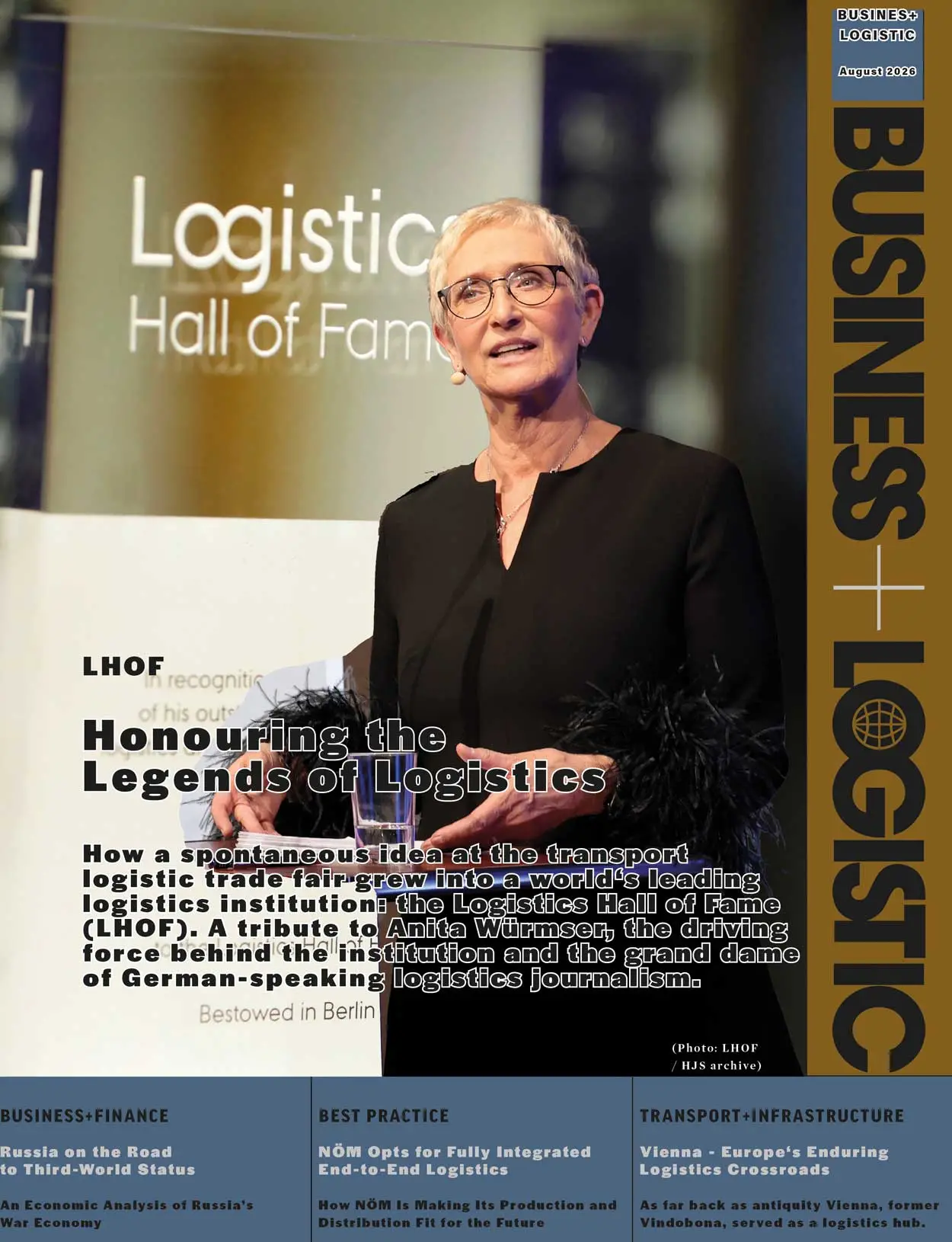
Wir freuen uns sehr, Ihnen nun die Ausgabe BUSINESS+LOGISTIC 02-2026 in Deutsch und BUSINESS+LOGISTIC 02-2026 in Englisch präsentieren zu dürfen. Diese Ausgabe steht ganz im Zeichen von Held:innen der Logistik und ihren Leistungen.
Wir bringen in dieser Ausgabe positive Nachrichten über Menschen, die den Mut hatten, allen Widrigkeiten zum Trotz, etwas zu riskieren und damit Erfolg hatten. Ihnen allen ist gemein, dass sie einerseits überzeugt waren von ihren Fähigkeiten und dem, was sie taten, und sich auf ihrem Weg nicht beirren ließen. Und zwar auch dann nicht, als ihnen der Wind massiv entgegen blies und sie sogar stellenweise scheiterten auf ihrem Weg zum Erfolg. Andere hätten wahrscheinlich „hingeschmissen“, wie man so sagt. Diese herausragenden Persönlichkeiten jedoch nicht.
BUSINESS+LOGISTIC 02-2026 – Ins Rampenlicht gerückt
Die Logistics Hall of Fame (LHOF) ehrt genau diese Unternehmer:innen. Sie holt sie in das Spotlight der allgemeinen Aufmerksamkeit. Zurecht! Denn diese Persönlichkeiten haben nicht nur für die Logistikbranche herausragendes geleistet, sondern in Wahrheit für die gesamte Weltwirtschaft. Ohne sie würde keine Industrienation heute funktionieren. Ohne sie würden wir nicht den Wohlstand haben, den wir heute nahezu als Selbstverständlichkeit hinnehmen. Und ohne sie würden unsere Demokratien nicht das sein, was sie heute sind. Im Grunde kann man – aus meiner persönlichen Perspektive – daher auch ihre Leistungen nicht hoch genug einschätzen für unsere Werte Menschenwürde, Menschenrechte, Freiheit, Demokratie und Rechtsstaatlichkeit, denn letztlich stehen sie für den grenzenlosen und reibungslosen Austausch zwischen den Kulturen. Sie stehen daher, ohne es zu wissen, in Wahrheit auf derselben Stufe, wie beispielsweise die Erfinder des Internets des CERN, Microsoft-Gründer Bill Gates und Steve Jobs, der Erfinder des Smartphones. Sie alle sorgten und sorgen bis heute für die Konnektivität zwischen den Menschen auf unserem Planeten. Für ihren Mut gilt diesen Unternehmer:innen unser ehrlicher Dank.
Kriegswirtschaft Russland – Wohlstand sinkt rapide
In der Ausgabe BUSINESS+LOGISTIC 02-2026 befassen wir uns aber auch mit dem Thema „Kriegswirtschaft“ und damit, dass Kriegswirtschaften grundsätzlich Wohlstand auffressen. Das erkennen wir beispielsweise schmerzhaft daran, dass die Kriegswirtschaft Russlands und dessen Krieg in der Ukraine unsere Volkswirtschaften im Westen derart belasten, dass es kaum mehr gelingt, den über 80 Jahre erwirtschafteten Wohlstand zu halten. Dieser Krieg zwingt alle EU-Staaten dazu, in Produkte zu investieren, welche nur eine geringe Nachfolge-Wertschöpfung mit sich bringen, wie etwa Waffen und daher Ressourcen verschlingen, die anderswo volkswirtschaftlich sinnvoller und gewinnbringender eingesetzt werden können.
Wir bringen in deser Ausgabe daher auch den volkswirtschaftlichen Nachweis, dass sich Krieg nicht lohnt und die Kriegswirtschaft für Russland selbst ein ökonomisches Fiasko darstellt, welche das Land auf lange Zeit zu einem Dritte-Welt-Staat macht. Die Logistik spielt übrigens auch hier eine entscheidende Rolle.
Herzlichst,
Ihr Team der BUSINESS+LOGISTIC
Hier BUSINESS+LOGISTIC 02-2026 in Deutsch und BUSINESS+LOGISTIC 02_2026 in Englisch als interaktives PDF downloaden.
BUSINESS+LOGISTIC 02-2026 – A Celebration of Courage
We are delighted to present BUSINESS+LOGISTIC 02-2026, now available in both German and English. This edition is dedicated to the heroes of logistics and the extraordinary achievements that have shaped our industry.
In these pages, we share inspiring stories of individuals who had the courage to take risks, persevere against the odds, and ultimately succeed. What unites them is an unwavering belief in their abilities and in the value of what they set out to achieve. They stayed the course even when confronted with fierce resistance, setbacks, and moments of apparent failure. Many others might have given up. These remarkable personalities did not.
BUSINESS+LOGISTIC 02-2026: Bringing Visionaries into the Spotlight
The Logistics Hall of Fame (LHOF) honors precisely these entrepreneurs and pioneers, placing them where they belong: in the spotlight of public recognition.
And rightly so. Their contributions extend far beyond the logistics sector itself. In reality, they have helped shape the foundations of the global economy. Without their innovations, no modern industrial nation could function as it does today. Without them, the prosperity many of us take for granted would not exist. And without the logistical networks they helped build, our democracies would look very different.
From my personal perspective, the value of their achievements can hardly be overstated. Their work supports the principles we cherish: human dignity, human rights, freedom, democracy, and the rule of law. At its core, logistics enables the seamless exchange of goods, ideas, and opportunities across borders and cultures.
In that sense, these entrepreneurs stand alongside other great innovators who transformed the way humanity connects. Just as the pioneers of the internet, Microsoft founder Bill Gates, and Steve Jobs with the smartphone revolution reshaped global communication, logistics visionaries have made the movement of commerce possible on an unprecedented scale. They have strengthened the connectivity of our world and brought people, markets, and societies closer together.
For their courage, determination, and foresight, they deserve our sincere gratitude.
Russia’s War Economy: Prosperity in Decline
This edition also examines the realities of a war economy and the economic consequences that inevitably accompany it. History repeatedly demonstrates that war economies consume wealth rather than create it.
We see this today in the profound economic burden imposed by Russia’s war against Ukraine. The conflict has placed significant pressure on economies across Europe and the wider West, making it increasingly difficult to preserve the prosperity built over more than eight decades of peace and economic development.
The war has compelled governments to allocate substantial resources to military spending and defense-related products. While necessary from a security perspective, such expenditures generally generate far less long-term economic value than investments in innovation, infrastructure, education, or productive industry. As a result, resources that could otherwise drive sustainable growth are diverted elsewhere.
In this issue, we also present an economic analysis demonstrating why war rarely pays and why the war economy is proving economically damaging for Russia itself. The long-term consequences are likely to weigh heavily on the country’s development and prosperity for years to come.
As always, logistics plays a decisive role in understanding these dynamics. Supply chains, transportation networks, and the movement of resources remain central to both economic growth and military capability, making logistics an indispensable lens through which to examine the challenges of our time.
With warm regards,
The BUSINESS+LOGISTIC Team
Download your interactive copy of BUSINESS+LOGISTIC 02-2026 here, available in German and English.
Verwandte Themen
(Mehr zur HJS MEDIA WORLD finden Sie hier unter hjs-media-world.at)