E-Mobility – Electric vehicles are driving demand in Germany, even as production remains under pressure. Yet German automotive manufacturers are only partially benefiting from the growing demand for electric vehicles. That is the key finding of the latest survey by the German Association of the Automotive Industry (VDA).
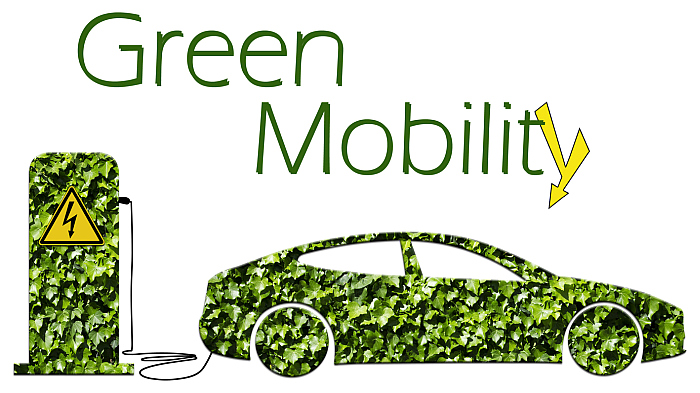
(Photo: Thommy Weiss / www.pixelio.de)
Germany’s passenger car market is sending mixed signals. While production and exports continue to decline, e-mobility is experiencing remarkable momentum. Battery electric vehicles (BEVs) in particular are increasingly emerging as the industry’s primary growth engine. These are among the key findings of the latest figures released by the VDA.
Production and Exports Remain Below Previous-Year Levels
In October 2026, 326,300 passenger cars were manufactured in Germany, representing a seven percent decline compared with the same month last year. The year-to-date performance also remains subdued. With 3.37 million vehicles produced so far, German automotive output is four percent lower than a year earlier and still significantly below pre-pandemic levels. Compared with 2019, production remains approximately 15 percent lower.
Exports are following a similar trend. In October, 246,500 passenger cars were shipped abroad, nearly ten percent fewer than in the corresponding month of the previous year. Since the beginning of the year, exports have reached 2.54 million vehicles, down five percent year-on-year.
Weak Overseas Demand Weighs on Order Intake
While domestic demand remained broadly unchanged in October, orders from international markets fell sharply, declining 16 percent compared with the previous year. Overall, German manufacturers recorded a 14 percent drop in incoming orders compared with October 2025.
One notable exception is the electric vehicle segment. Domestic orders for fully battery-electric vehicles surged by an impressive 68 percent in October. Since the start of the year, demand has increased by 66 percent, underlining the growing appetite for EVs despite a challenging market environment.
E-Mobility Reaches New Highs
The momentum is also evident in new vehicle registrations. A total of 254,500 passenger cars were newly registered in October, an increase of two percent year-on-year. Between January and October, registrations climbed to 2.48 million units, representing growth of five percent. Nevertheless, the overall market remains around 18 percent below its pre-crisis 2019 level.
Electrified vehicles delivered particularly strong results. New registrations of BEVs, plug-in hybrid electric vehicles (PHEVs), and fuel-cell electric vehicles (FCEVs) rose by 47 percent in October to 122,600 units. As a result, electrified models accounted for 48.2 percent of all new registrations, marking the highest share recorded since the environmental bonus scheme was scaled back at the end of 2022.
Battery-electric vehicles alone surged by 79 percent to 94,100 units. Plug-in hybrids, however, moved in the opposite direction. Registrations fell by eight percent to 28,500 units, marking their first decline since September 2024.
Nearly One Million Electric Cars Registered in Ten Months
Germany has already registered 974,200 electric vehicles during the first ten months of 2026, representing year-on-year growth of 43 percent.
Of these, 698,200 were fully battery-electric vehicles, with registrations soaring by 61 percent. Plug-in hybrids accounted for 276,000 units, posting a more modest increase of 11 percent.
E-Mobility Becomes the Industry’s Growth Driver
The latest VDA data clearly show that Germany’s automotive industry continues to grapple with weak production and declining exports. At the same time, e-mobility is gaining importance and is increasingly becoming the market’s key growth driver.
The sharp rise in both orders and registrations for battery-electric vehicles suggests that the sector’s transformation is gathering pace. Whether this momentum will be sufficient to offset losses in production and exports over the long term remains to be seen, but the coming months are likely to provide a clearer indication of the industry’s direction.
VDA at a Glance
The German Association of the Automotive Industry (VDA) is the leading representative body of Germany’s automotive sector. It represents more than 650 companies, including major vehicle manufacturers such as BMW, Mercedes-Benz, Volkswagen, Audi, and Porsche, as well as a wide range of suppliers and providers of mobility and technology solutions.
The association plays a central role in promoting innovation, e-mobility, digitalisation, sustainability, and international trade. It also publishes regular market analyses, production and registration statistics, and serves as the organiser of IAA Mobility, one of the world’s leading international mobility exhibitions.
Verwandte Themen
(Mehr zur HJS MEDIA WORLD finden Sie hier unter hjs-media-world.at)