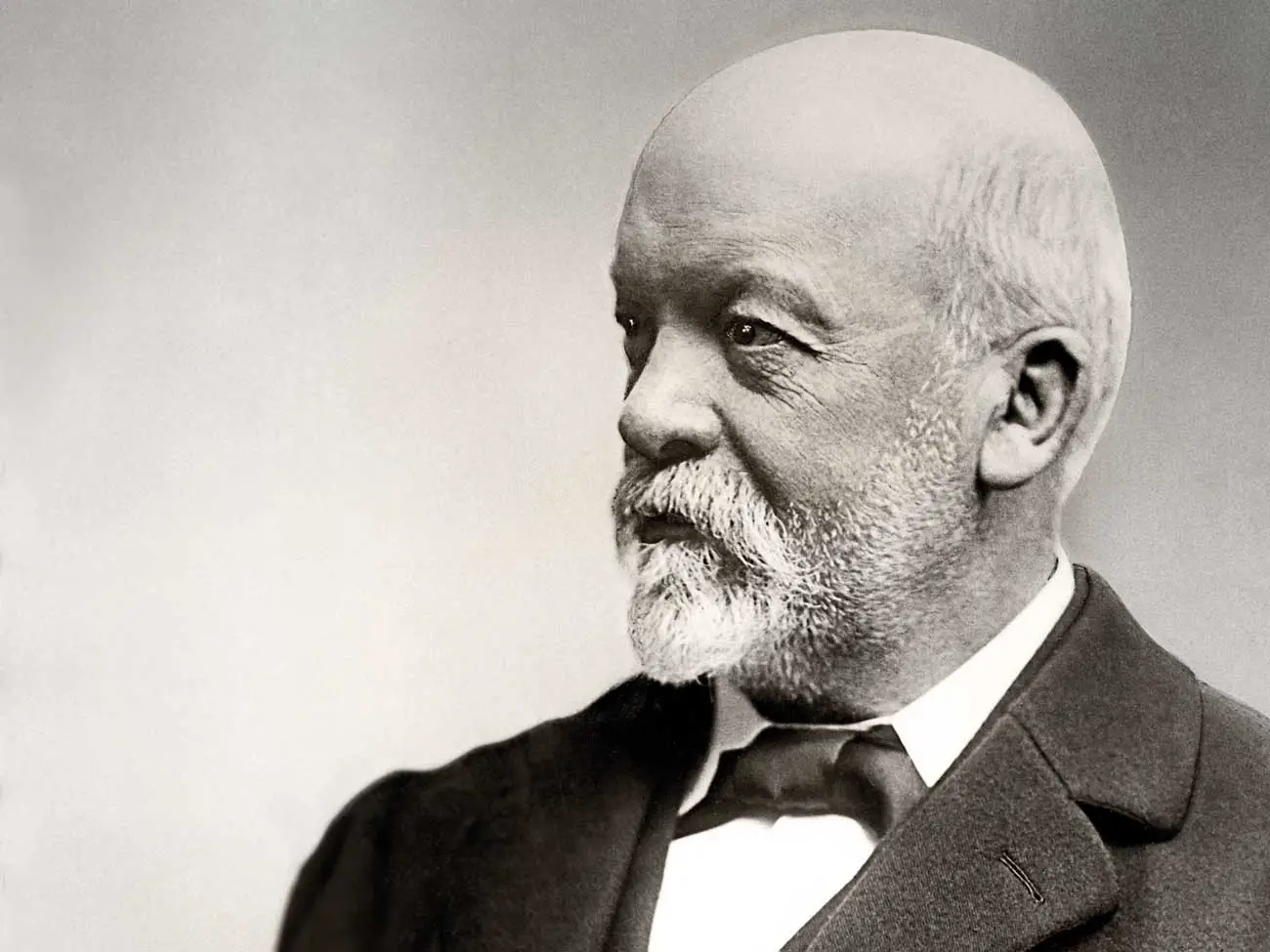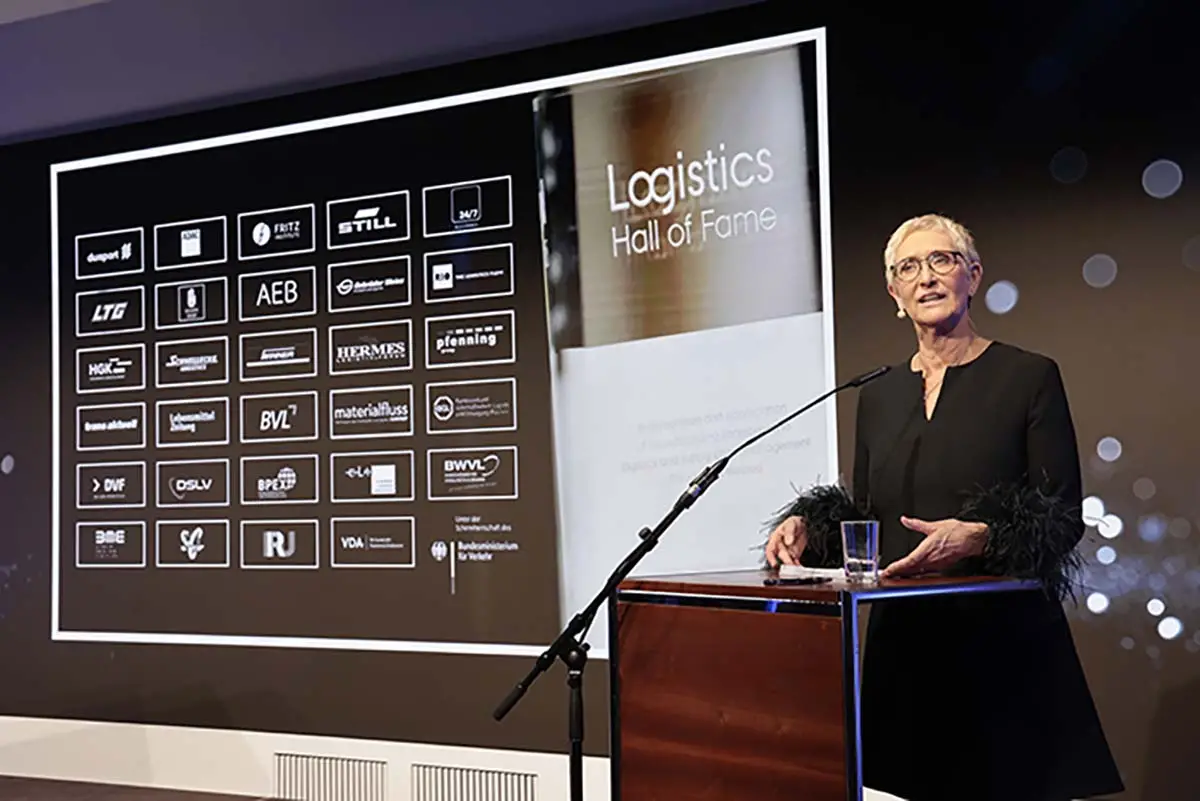
How a spontaneous idea at the transport logistic trade fair grew into a world‘s leading logistics institution: the Logistics Hall of Fame (LHOF). A tribute to Anita Würmser, the driving force behind the institution and the grand dame of German-speaking logistics journalism.
By Hans-Joachim Schlobach
(Featured Image: (Foto: Sebastian Gabsch Fotografie / HJS archive)
There are institutions that are carefully planned. And there are institutions that come into being because someone has the courage to take an idea seriously. The Logistics Hall of Fame (LHOF) belongs to the latter category. What began as a spontaneous idea at Munich‘s transport logistic trade fair was transformed by its founder, Anita Würmser, into an institution that today brings together some of the most influential figures in global logistics. In doing so, it highlights the vital role of the logistics industry in all its facets, from driving global economic growth to ensuring the everyday supply of goods. At the same time, the Logistics Hall of Fame reflects an entire sector that generates annual revenues of around €300 billion in the German-speaking countries alone.
A Hall of Fame for Logistics
Today, the LHOF is widely regarded as the world‘s leading hall of fame dedicated to logistics. Its roster of members reads like a who‘s who of business history: container pioneer Malcolm McLean; Gottfried Schenker, creator of rail freight consolidation services; Gottlieb Daimler, inventor of the truck; Amazon founder Jeff Bezos; FedEx creator Frederick W. Smith; barcode pioneers Norman Joseph Woodland, Bernard Silver and George J. Laurer; the Thurn und Taxis family, founders of the international postal system; and the organisers of the Berlin Airlift, among many others. And every year, another distinguished personality joins their ranks as a „Hall of Famer“, the term Anita Würmser uses for members of the Logistics Hall of Fame.
Humble Beginnings
Yet the origins of this international institution were remarkably modest. As Anita Würmser recalls in an interview with BUSINESS+LOGISTIC / blogistic.net, it all started with an off-the-cuff remark at transport logistic in Munich. Amid the bustle of the 2003 exhibition, Anita Würmser, then Editor-in-Chief of VerkehrsRundschau, and Frank Schnell, Editor-in-Chief of DVZ, met with Detthold Aden, then Chief Executive Officer of BLG Logistics Group. Aden was frustrated that almost every new idea seemed to receive an award, while the people who had genuinely transformed logistics largely remained unknown. He had a point: at the time, there was no institution anywhere in the world that comprehensively documented the evolution of logistics while honouring the individuals who had shaped it.
What happened next would become part of logistics history. Aden‘s suggestion was simple: „Why don‘t you create a Hall of Fame?“ Frank Schnell dismissed the idea. Anita Würmser did not. Although she had no clear blueprint for how such an institution might be established, and no way of knowing what it might eventually become, the determined journalist, backed by an extensive network throughout the industry, was willing to take the risk. On 18 September 2003, she founded the Logistics Hall of Fame.
More than two decades later, that spontaneous idea has evolved into a globally recognised institution that documents the history of logistics, honours its most influential personalities and continues to inspire future generations of industry pioneers.
Giving a Face to an Invisible Industry
With this idea, Anita Würmser tapped into a long-overlooked reality. Few industries have a greater impact on everyday life than logistics. Without logistics, there would be no global trade, no just-in-time manufacturing, no e-commerce, and no functioning healthcare or supply systems. Yet for decades, the people behind these achievements remained largely invisible.
At the same time, logistics professionals are often associated with problems rather than progress. For most people, logistics only becomes noticeable when something goes wrong: traffic congestion, noise, delayed deliveries or even supply shortages. When supply chains function smoothly, they tend to go unnoticed. Ironically, that very invisibility is one of the industry‘s greatest successes.
The consequences are striking. Almost everyone knows Amazon, but far fewer know its founder, Jeff Bezos. Millions see containers moving along roads, railways and through ports every day, yet until the Logistics Hall of Fame brought his achievements back into the spotlight, few had heard of Malcolm McLean, the man whose standardised shipping container laid the foundations of modern global trade. Likewise, hardly anyone today remembers that Gottfried Schenker revolutionised rail freight transport as early as the nineteenth century. And while billions of barcodes are scanned around the world every day, only a small number of people could identify Norman Joseph Woodland, Bernard Silver and George J. Laurer, the pioneers who made the technology possible. The LHOF changed that by giving these innovators the recognition they long deserved.
More Than Just Another Industry Award

(Photo: Sebastian Gabsch / HJS archive)
From the outset, Anita Würmser was determined that the initiative should not become just another industry prize. It was not intended to reward strong quarterly results, record revenues or short-term business success. Nor was it meant to be yet another lifetime achievement award. Instead, it sought to answer a much more fundamental question: Who has permanently changed logistics and, by extension, the way the global economy functions?
The statutes of the LHOF still reflect this philosophy today. They state that induction is reserved for individuals whose achievements have significantly advanced logistics and supply chain management and whose influence has extended far beyond their own organisations.
This principle fundamentally distinguishes the Logistics Hall of Fame from virtually every other award in the logistics sector and from many business awards in general. The focus is not on positions, titles or corporate status, but on the lasting impact of ideas and innovations.
Guardians of Logistics History
A Hall of Fame is only as credible as its selection process. For that reason, induction is based neither on popularity nor on public visibility, but on the demonstrable impact an individual‘s achievements have had on business and society. Nominations are accepted from around the world, and they are. Every candidate is then subjected to extensive research and documentation in a process that reflects the standards of objective business journalism.
The Logistics Hall of Fame Council, a body comprising industry experts, journalists, economists and business opinion leaders, prepares an initial shortlist. In a second stage, an international jury of experts from academia, business, industry, politics, trade associations and the media makes the final decision.
Among its members is Hans-Joachim Schlobach, publisher of BUSINESS+LOGISTIC and blogistic.net. Recognised early on for his expertise in logistics and supply chains, he was invited to join the jury and has remained an active supporter of the Logistics Hall of Fame ever since. With more than 70 jury members representing a broad spectrum of the logistics industry, the panel reflects a diverse range of perspectives and expertise. Voting is conducted by secret ballot and overseen by an independent election commissioner.
A High Bar for Recognition
In other words, a nomination must itself provide compelling evidence that a candidate‘s achievement has fundamentally and permanently shaped the logistics industry or the wider economy. The bar for becoming a Hall of Famer is therefore exceptionally high.
Yet it is precisely this rigorous standard that explains the institution‘s outstanding reputation. Many candidates are nominated several times before eventually being inducted. Some wait for years. Others never make it, because not every successful career is automatically worthy of a place in the Hall of Fame.
A Chronicle of Transformation Told Through People
The lasting impact of this selection process becomes evident when one studies the Hall of Fame‘s roster of inductees. What emerges is nothing less than the story of the modern economy itself. The Logistics Hall of Fame does not tell the history of products, brands or corporations. Ultimately, it tells the story of people and ideas, each rooted in the realities and challenges of its own era.
Hall of Famers Who Changed the World
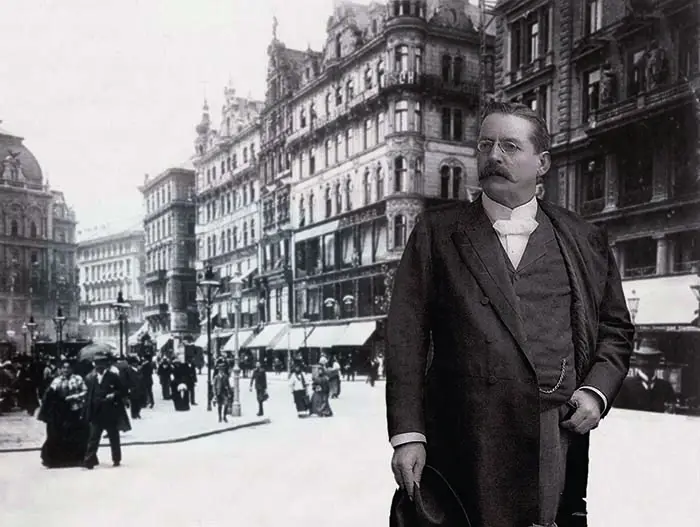
(Photo: Schenker / HJS archive)
Henry Ford and Ransom Eli Olds revolutionised industrial manufacturing through assembly-line production. Malcolm McLean turned the shipping container into the standard of global trade, while Frederick W. Smith transformed the movement of goods with the creation of FedEx and the concept of express logistics. At Toyota, Taiichi Ohno developed the Kanban system and laid the foundations of modern lean management. Jeff Bezos combined software, digital platforms and logistics into an entirely new model of commerce. Gottlieb Daimler and Gottfried Schenker, meanwhile, created concepts and technologies that underpin what most people today take for granted: logistics networks that move goods efficiently across national borders. Each of these pioneers changed not only an industry, but also the way economies function.
Documenting the Evolution of Global Supply Chains
Viewed as a whole, the Logistics Hall of Fame is far more than a collection of distinguished careers. It documents the evolution of global supply chains. Each inductee represents a technological, organisational or entrepreneurial milestone in that development. For this reason, the Hall of Fame is much more than an honorary roll of distinguished names. It is a living history of logistics, charting the ideas, innovations and breakthroughs that have shaped the movement of goods around the world.
The Fight for the Name
One of the most remarkable chapters in the history of the Logistics Hall of Fame unfolded far from gala ceremonies and awards banquets. Over the course of almost a decade, the organisation fought to secure trademark protection for the name „Logistics Hall of Fame“. The issue was not a dispute with competitors, nor a question of who had used the term first. The central question was whether „Logistics Hall of Fame“ could be legally protected as a trademark at all. The challenge stemmed from the fact that the term „Hall of Fame“ is generally regarded as a descriptive expression. Critics argued that it merely referred to a generic concept and therefore lacked distinctiveness.
Anita Würmser and her colleagues responded with persistence. Over many years, they compiled evidence, publications and international media references demonstrating that the term had become globally associated with one specific institution. Eventually, the European trademark authorities recognised that distinct identity and granted protection for the name.
What may appear to be a legal footnote was, in reality, a significant milestone. It confirmed not only the uniqueness of the Logistics Hall of Fame, but also the extent to which it had become established far beyond the German-speaking world.
International Recognition

(Photo: GW / HJS archive)
Today, the global reach of Anita Würmser‘s idea is evident on a daily basis. The Logistics Hall of Fame regularly receives nominations and enquiries from North America, Asia and across Europe. Researchers consult its archives for academic studies and doctoral theses. Journalists turn to its documentation when investigating historic innovations. Educational institutions use its records as source material for teaching and research.
An interesting pattern has emerged in the process. While companies in German-speaking countries have often been comparatively reluctant to celebrate their historical achievements, American businesses tend to communicate the significance of logistical innovation much more openly.
The Logistics Hall of Fame bridges that gap. It gives worldwide visibility to individuals who changed the world not through ideology or conflict, but through peaceful innovation, entrepreneurial vision and the successful implementation of their ideas. Without Anita Würmser‘s initiative, many of these pioneers would today be little more than footnotes in logistics history. Ensuring that they are remembered may be her greatest achievement of all.
When History Becomes Complicated
Determining who truly invented, initiated or decisively advanced an innovation is not always straightforward. One of the best examples is the pallet. Over the years, the Logistics Hall of Fame received around fifty nominations naming a wide variety of inventors, companies and organisations as the pallet‘s creator. After extensive research, the Hall of Fame chose a solution that was highly unusual for the institution. Rather than inducting a single individual, it honoured the innovation itself.
Only later were the key pioneers behind the development of the pallet and the concept of pallet pooling recognised through dedicated distinctions. Today, these pioneers officially belong to the Hall of Fame. The case illustrates how seriously the organisation takes historical accuracy. Recognition is not awarded according to popularity, lobbying efforts or corporate influence, but only after meticulous examination of the historical record.
Preserving the Past, Shaping the Future
Perhaps the greatest surprise for outsiders is that the Logistics Hall of Fame has long since become much more than an archive of logistics history. Over the past decade, it has evolved into a platform for addressing both current and future challenges facing the industry. To support this broader mission, Anita Würmser established a founders‘ award, sponsored in recent years by companies such as TRATON and STILL: the Logistics Leader of the Year Award.
The distinction honours individuals who are currently shaping the future of logistics and business through outstanding leadership and innovation. Among the most recent recipients is DACHSER Chief Development Officer Stefan Hohm, recognised for his contribution to the future development of logistics and supply chain management.
The Fritz Institute

(Photo: Sebastian Gabsch Fotografie / HJS archive)
Another important addition is the Lynn C. Fritz Medal for Excellence in Humanitarian Logistics. The award shines a spotlight on an area whose significance is often underestimated: humanitarian logistics. Whether responding to natural disasters, refugee movements or supply crises, relief organisations depend on professionally managed supply chains to deliver aid where it is needed most. Sponsored by the California-based Fritz Institute, the medal recognises outstanding achievements in humanitarian logistics and thereby reflects the very spirit of the Logistics Hall of Fame: making crucial but often invisible contributions visible.
ConnectChains in Vienna
Last but not least, the Logistics Hall of Fame has created another forum for forward-looking dialogue through its international ConnectChains Conference, which this year takes place at Airport Center Vienna. The conference brings together representatives from academia, business, politics and humanitarian organisations to develop solutions for building more resilient supply chains. In doing so, the Hall of Fame not only preserves the history of logistics; it actively helps shape its future.
A Return to Vienna
This year, the latest Hall of Famers will be inducted during the annual gala ceremony in Vienna. For Vienna, for Hans-Joachim Schlobach, and for BUSINESS+LOGISTIC/blogistic.net, the occasion carries particular symbolic significance. It was in Vienna that the first annual gala of what would become a global institution was held. On that occasion, Gottfried Schenker was posthumously inducted into the Hall of Fame.
From Vienna, and initially from little more than a garage, Schenker built the foundations of a logistics empire whose company later operated for decades under the DB Schenker brand and today forms part of the DSV Group. (For more on this remarkable story, see BUSINESS+LOGISTIC below. An earlier version of the article was originally published ten years ago and has since been updated and expanded.)
Vienna: A Logistics Capital
Few locations could provide a more fitting backdrop. For centuries, Vienna served as a logistical crossroads linking East and West, North and South. It connected trade routes, railways, roads, ports and, later, air transport networks. As the capital of a great empire and one of the world‘s largest cities of its era, Vienna was an international hub long before the term became fashionable. During Schenker‘s time, some forty languages were spoken in the city. It was precisely this international character that made Vienna the ideal place to launch a logistics start-up such as the Schenker forwarding company. At the same time, few European cities embodied the connection between tradition and innovation as convincingly as Vienna.
Seen in this light, the Hall of Fame‘s return to Vienna is more than another stop on its annual calendar. It is a homecoming to a city deeply woven into the history of logistics itself, and a visible reminder of how far a spontaneous idea from 2003 has come. What began as an inspired conversation at a trade fair has grown into the world‘s foremost institution for honouring the people whose ideas keep global supply chains moving.
A Personal Reflection
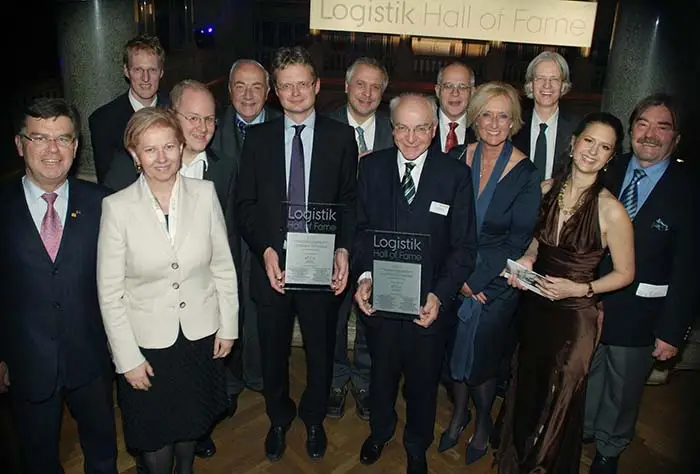
(Photo: LHOF / HJS Archive)
As a long-standing supporter of the Logistics Hall of Fame through my publications BUSINESS+LOGISTIC and blogistic.net, I have followed the development of the organisation for many years and have had the privilege of contributing ideas and perspectives from Vienna along the way. Looking back, what continues to impress me is not merely the number of personalities inducted into the Hall of Fame. What I find truly remarkable is the consistency with which the institution has remained faithful to its original mission.
For decades, logistics has lived with a paradox: it is indispensable, yet often invisible. That is precisely why the Logistics Hall of Fame means far more to me than a simple recognition programme. It makes visible what would otherwise remain overlooked. It reminds us that progress is not driven by products, but by people. And it demonstrates that behind every container, every barcode, every parcel, every supply chain and every digital business model stand individuals who had the courage to rethink the way things were done.
From a Casual Remark to a Global Institution
Perhaps that is the true success story of the Logistics Hall of Fame and the reason it continues to fascinate me. It did not emerge from a strategic master plan. It was not the result of a major industry association initiative, nor was it created through government funding. It began with a single sentence:
„Why don‘t you create a Hall of Fame?“
More than twenty years later, it ranks among the most influential institutions in global logistics, enjoying international recognition, supported by a distinguished jury and backed by a membership roster that reflects the evolution of world trade in all its dimensions. Back in Munich in 2003, Detthold Aden could hardly have imagined the consequences of his spontaneous suggestion. Anita Würmser probably could not either.
And yet it happened.
An idea exchanged between appointments at a trade fair grew into a globally respected institution. A hall of fame dedicated to the people without whom modern goods flows and global supply chains would never have developed as we know them today. Perhaps this is the Logistics Hall of Fame‘s greatest achievement: it has secured a permanent place in history for the architects of progress.
Verwandte Themen
(Mehr zur HJS MEDIA WORLD finden Sie hier unter hjs-media-world.at)