
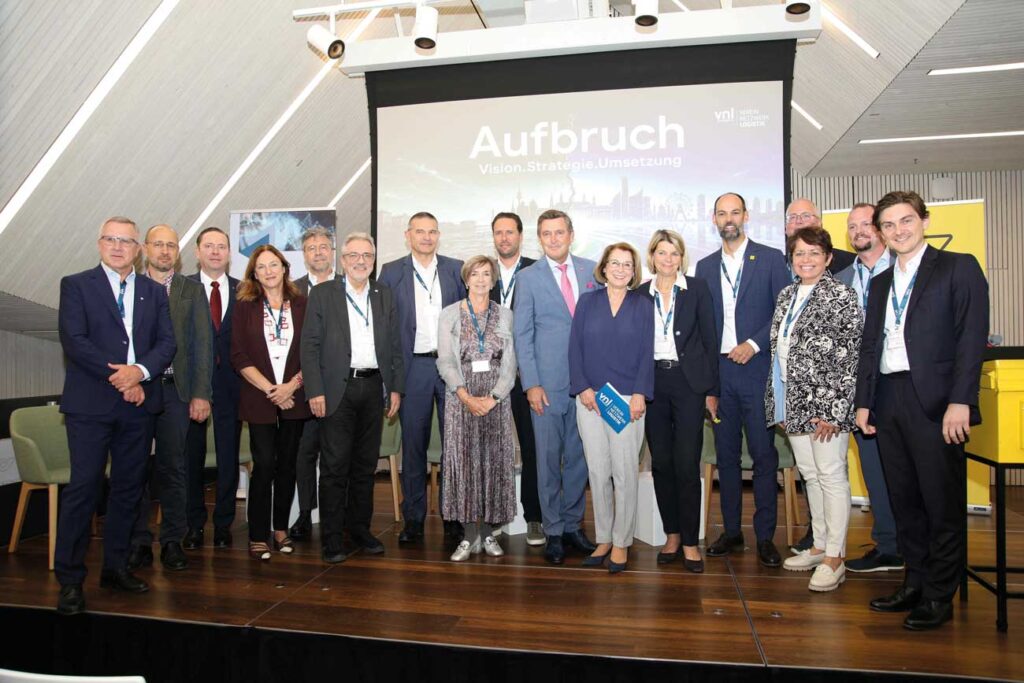
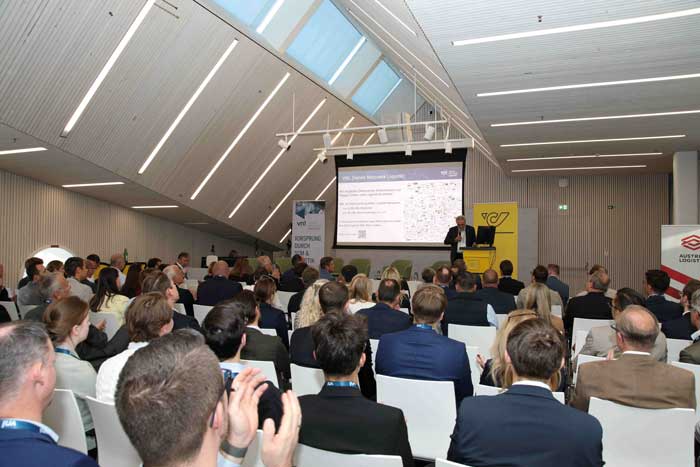
Austria’s logistics industry is facing a dual challenge. While global supply chains are becoming increasingly volatile, growing urban populations and ambitious climate targets are driving the need for new freight transport concepts. These issues took centre stage at the VNL Logistics Forum Vienna 2026 in early October, bringing together leading representatives from politics, industry and logistics.
A central theme of the event was how Austria can maintain and strengthen its position as a competitive business and logistics hub. VNL President Franz Staberhofer emphasised that logistics has long since evolved beyond transport and warehousing. Today, it is a critical enabler of reliable supply chains, economic growth and international competitiveness. The key challenge now is translating strategic ambitions into tangible action, particularly in infrastructure development, energy supply and investment security.
VNL: Austria’s Logistics Strategy Moves into the Implementation Phase
A major focus of the VNL Logistics Forum Vienna 2026 was the implementation of Austria’s national logistics strategy. In a high-profile panel discussion featuring Federal Minister Peter Hanke, Beate Färber-Venz (Venz Logistik), Matthias Hofmann (Austrian Post), FACC CEO Robert Machtlinger and Franz Staberhofer, participants addressed the expansion of transport and energy infrastructure, the persistent shortage of drivers and the need for long-term regulatory certainty.
Hanke highlighted plans to install 1,300 truck charging points along Austria’s primary road network by 2035. His message was clear: Austria must move beyond strategy papers and accelerate implementation if it wants to remain internationally competitive.
Innovation and Collaboration as Key Enablers
Barbara Potisk-Eibensteiner, CFO of Austrian Post, underlined the crucial role of innovation and collaboration in managing the sector’s transformation. Digitalisation, she noted, enables smarter processes, more efficient use of resources and the development of innovative solutions for businesses and society alike. Open exchange among stakeholders remains essential to shaping the logistics ecosystem of the future.
VNL: Securing Supply for Growing Metropolitan Areas
Another major topic was the challenge of supplying rapidly growing urban regions. Vienna’s Director of Planning, Thomas Madreiter, presented the city’s new Urban Logistics Master Plan. Vienna’s population is expected to reach approximately 2.3 million by 2053, while the city simultaneously aims to achieve climate neutrality by 2040.
The master plan seeks to better integrate freight transport, urban development and climate policy. Key measures include incorporating logistics requirements into urban planning at an early stage, establishing zero-emission zones and investing in terminal, rail and port infrastructure to support future growth.
Decarbonising Freight Transport in Practice
Several case studies demonstrated that the decarbonisation of road freight transport is already gaining momentum. Retailer dm and Quehenberger Logistics are gradually converting deliveries to 100 stores in and around Vienna to a fleet of ten electric trucks, reducing annual CO₂ emissions by around 389 tonnes.
Meanwhile, Schlager Transport Logistik has already logged approximately 1.75 million kilometres with its fully electric truck fleet. According to the company, this has saved more than 410,000 litres of diesel and reduced CO₂ emissions by 1,078 tonnes. The projects also highlight a key lesson: successful e-trucking requires an integrated ecosystem combining vehicles, charging infrastructure, energy management and suitable operational frameworks.
Austria and the Changing Global Transport Landscape
Looking beyond Austria’s borders, Alexander Till of Hafen Hamburg Marketing examined developments in global transport markets. Increasing consolidation within the container shipping industry is reshaping power structures across international supply chains. Major shipping lines are extending their influence beyond maritime transport into terminal operations and other logistics assets.
For European businesses, this growing concentration creates new dependencies and underlines the importance of building resilient supply chains capable of adapting to shifting market dynamics.
VNL: The Future of Logistics Goes Beyond Technology
The VNL Logistics Forum Vienna 2026 made one point abundantly clear: the future of logistics will not be determined by technology alone. Competitive logistics systems also require robust infrastructure, reliable political and regulatory frameworks, and close cooperation among all stakeholders. Only then can Austria successfully balance supply security, economic competitiveness and climate objectives.
VNL at Glance
With more than 6,200 individual members and over 600 member companies, the VNL (Verein Netzwerk Logistik) is Austria’s largest logistics association and business network for logistics and supply chain management. The association brings together companies, research and educational institutions, technology centres and logistics organisations to strengthen logistics expertise and support competitiveness, innovation and supply security.
Each year, VNL organises more than 60 logistics events and over 50 professional seminars. The organisation is actively involved in national and international research projects, advises institutional stakeholders and is a founding member of the Supply Chain Intelligence Institute Austria (ASCII).
VNL also supports the AUSTRIAN LOGISTICS umbrella brand, helping to promote Austria as a leading logistics and supply chain management location on the international stage.
(Mehr zur HJS MEDIA WORLD finden Sie hier unter hjs-media-world.at)
Verwandte Themen
(Mehr zur HJS MEDIA WORLD finden Sie hier unter hjs-media-world.at)